
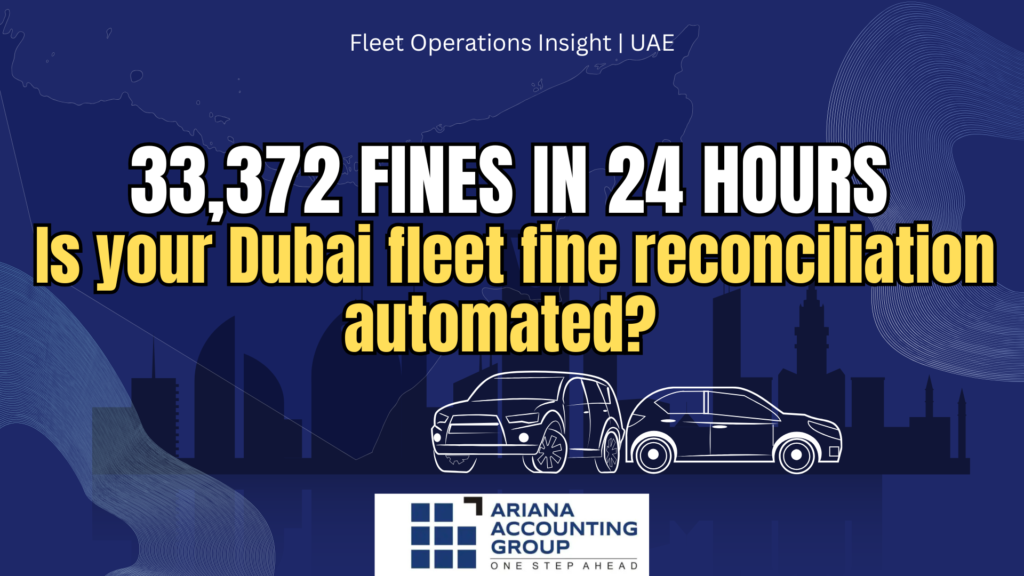
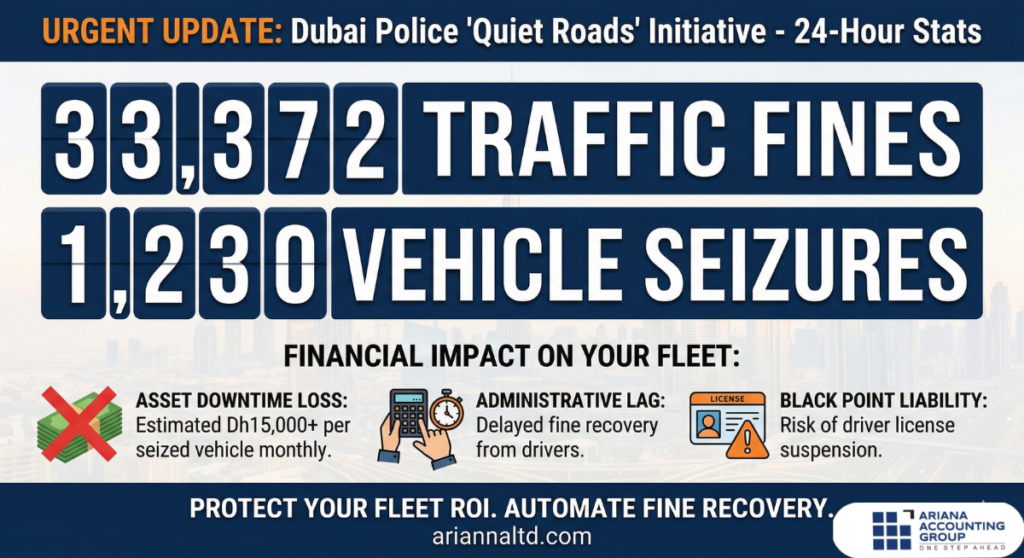
On Sunday, April 6, 2026, the Dubai Police issued 33,372 traffic fines and seized 1,230 vehicles. This 24-hour “Quiet Roads” crackdown changed the landscape for fleet owners. Consequently, mastering Dubai fleet fine reconciliation is now a critical survival skill. If you do not track these penalties in real-time, your net profit remains at risk. Specifically, you must act fast to protect your margins.
The Financial Reality of the “Quiet Roads” Initiative
According to the Official Dubai Media Office Report, the crackdown targeted noisy vehicles, illegal modifications, and reckless driving. For a fleet manager, a single noise violation carries a Dh2,000 fine.
However, the “true cost” goes beyond the ticket. When a vehicle is seized, it becomes a non-performing asset. Sixty days of impoundment can equal Dh15,000+ in lost revenue. Without a robust system for Dubai fleet fine reconciliation, these costs leak from your margin and stay there.
Why Manual Dubai Fleet Fine Reconciliation Fails
Most UAE limousine companies still rely on slow, manual bookkeeping. However, manual systems simply cannot keep up in a high-enforcement environment. Specifically, manual Dubai fleet fine reconciliation causes three major problems:
Administrative Lag: Frequently, the driver finishes their shift before the fine appears on the portal.
Cross-referencing thousands of fines against driver shifts on the RTA portal is where most recovery opportunities are missed. See how our reconciliation logic works here or reach out for a quick check of your recent fine data
Deduction Errors: Furthermore, you cannot easily match a timestamped fine to a specific driver without analytics.
WPS Risks: Consequently, you risk labor department audits if you deduct fines without precise data.

3 Steps to Automate Your Dubai Fleet Fine Reconciliation
You must shift toward proactive analytics to protect your ROI. Specifically, follow these three steps to secure your fleet:
1. Sync Your Data: First, connect your driver logs to the Dubai Police portal. This removes all confusion.
2. Daily Reconciliation: Instead of waiting, reconcile your fines every 24 hours. This holds contract drivers accountable immediately.
3. Analyze Driver Risk: Furthermore, use data to find high-risk drivers. This prevents future seizures. Consequently, you protect your fleet’s survival
This level of tracking is also how we help fleets catch fuel leakage. You can read our full analysis on UAE Fuel Theft to see how these two costs are connected.
How Arianna Accounting & Analytics Can Help
We aren’t just accountants; we are data specialists for the UAE transport niche. Our Fleet Analytics Services are designed specifically to stop the “data leakage” that kills limo margins.
From automating your Dubai fleet fine reconciliation to managing WPS-compliant payroll for 50+ drivers, we ensure your books are as streamlined as your fleet.

Conclusion: Data is Your Best Defense
The “Quiet Roads” initiative proves that the UAE is moving toward a highly monitored, regulated transport environment. Your accounting must keep up. Mastering Dubai fleet fine reconciliation isn’t just about avoiding costs—it’s about building a scalable, profitable business.
Stop the leakage today. Contact Arianna for a Fleet Financial Audit or download our 2026 Compliance Checklist below.