
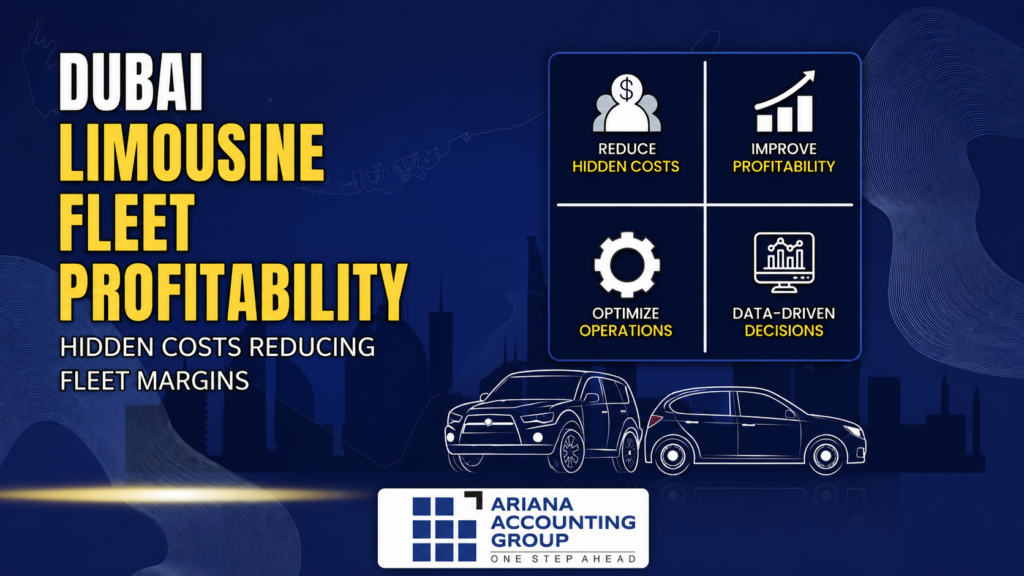
Dubai limousine fleet profitability is becoming harder to maintain as operational costs continue rising across the UAE transport sector. In today’s shifting economic landscape, due to ongoing regional pressures from the West Asia War and a noticeable drop in tourist inflows, the UAE luxury vehicle market has experienced a distinct cooldown. With fewer high-paying tourists booking trips, limousine and car rental companies can no longer rely purely on high trip volumes to hide back-end inefficiencies.
Success now depends on absolute operational efficiency and controlling hidden cost leaks. While fleets stay busy with daily bookings, hidden operational leakages like unmonitored Salik crossings, excessive engine idling, and untracked kilometers are quietly eroding net margins. Understanding and instantly flagging these hidden micro-costs is no longer optional; it is essential for protecting your long-term fleet survival and performance.
Expanding the Blueprint Limousine Chauffeurs vs. Premium Car Rentals
While the operational rhythm of a VIP chauffeur service revolves around hourly bookings and airport transfers, high end passenger car rental agencies in Dubai face the exact same profitability battle. Whether a luxury vehicle is being driven by a corporate client on a weekly rental or an in-house chauffeur waiting outside a luxury hotel, the core financial vulnerabilities remain identical.
For both premium sectors, maintaining a healthy Dubai limousine fleet profitability framework relies on two shared operational pillars:
1. Total Asset Visibility and Utilization
A luxury vehicle sitting unutilized in a rental lot or a limousine idling endlessly without an assigned trip eats away at your capital. Premium rental companies and limousine operators must utilize unified analytics to track active peak timings, seasonal tourism drops, and vehicle availability across Dubai, ensuring high value assets are deployed where demand and pricing are highest.
2. The Battle Against Revenue Leakage
Protecting your broader Dubai limousine fleet profitability is no longer just about increasing your total booking volume; it is about protecting the revenue from the trips you already have. Issues like unauthorized vehicle usage, unmatched Salik tolls, and undeclared trips by unmonitored drivers represent massive blind spots that quietly destroy profit margins across both rental contracts and luxury chauffeur logs.

Why Revenue Does Not Equal Profit
Many Dubai limousine operators focus heavily on trip volume and revenue targets. However, higher trip counts do not always result in higher profit margins. Factors such as idle vehicle hours, route inefficiencies, driver overtime, salik expenses, and fuel misuse can quietly reduce overall fleet profitability even when bookings remain strong.
Idle Time and Dead Mileage in UAE Fleets
Idle time and dead mileage are among the biggest hidden operational costs affecting Dubai limousine fleet profitability. Vehicles that spend excessive time waiting between trips or moving without passengers increase fuel consumption, reduce utilization efficiency, and lower profit margins across the fleet.
Fuel and Salik Cost Leakage
Fuel misuse, inefficient routing, and increasing salik charges can significantly affect Dubai limousine fleet profitability. Even small daily operational leakages multiplied across multiple vehicles can create major monthly financial losses for UAE fleet operators.
This leakage becomes critical with the upcoming June 1, 2026 Salik updates, which introduce a mandatory 5% VAT layer directly onto all toll crossings (adjusting peak tolls to an inclusive 6.30 AED and off-peak to 4.20 AED). If your fleet logs hundreds of gate crossings weekly and you are still manually reconciling toll bills against driver logs, untracked crossings or unbilled client tolls represent an immediate, direct hit to your weekly profit margins.
Cost Per Trip Analytics
Tracking cost per trip helps fleet operators understand the true profitability of each vehicle and booking. Revenue alone does not provide complete visibility into operational performance. Accurate trip-level analytics help identify inefficient routes, high-cost vehicles, and low-margin operations.
Driver Performance and Utilization
Driver utilization directly affects Dubai limousine fleet profitability. Measuring performance only through login hours or completed trips often hides inefficiencies related to waiting time, route planning, overtime, and low vehicle utilization.
Fleet Compliance and Financial Leakage
VAT compliance issues, undeclared trips, reconciliation problems, fines, and incomplete operational reporting can create hidden financial leakage across UAE limousine and car rental operations. Maintaining accurate operational and financial visibility is critical for long-term fleet profitability.
Undeclared Trips
A major driver of this financial leakage comes in the form of undeclared trips. These are moments when a vehicle is actively moving, consuming fuel, and accumulating wear-and-tear, but no booking is registered in your central platform. At a fleet scale, just two untracked airport runs a week per vehicle can translate into thousands of AED in lost revenue every month. Maximizing profitability in a cooling market requires a systematic reconciliation tool that pairs GPS tracking directly with booking logs to flag these financial blind spots instantly.